


1. Introduction to the Author: William Kent Krueger
William Kent Krueger is an American author best known for his mystery fiction, particularly the long-running Cork O’Connor Mysteries series. Beyond Cork O’Connor, Krueger has also earned acclaim for standalone novels such as Ordinary Grace, This Tender Land, and The River We Remember. Ordinary Grace won the Edgar Award for Best Novel, one of the most prestigious honors in American mystery fiction.
What distinguishes William Kent Krueger’s writing is that he rarely constructs a crime simply to give readers a killer to identify. The mystery often serves as an entrance into larger stories about family, community, loss, loyalty, faith, justice, and the relationship between people and the land they call home.
This approach is particularly evident throughout the Cork O’Connor Mysteries. Cork is a former sheriff of both Irish and Ojibwe heritage. His position between two cultures allows Krueger to examine social and cultural conflicts from a more complicated perspective.
Another defining strength of William Kent Krueger is his sense of place. Forests, lakes, bitter weather, isolation, and the vast landscape of northern Minnesota are never merely scenery. They shape the emotional atmosphere of his stories.
The Los Angeles Times has praised Krueger’s prose, character development, and evocative descriptions of Minnesota’s Northwoods. Publishers Weekly similarly highlighted the haunting atmosphere of Spirit Crossing and the subtle supernatural elements woven into one of the series’ more intricate mysteries.
That combination helps explain why William Kent Krueger appeals not only to dedicated mystery readers but also to those looking for crime fiction with literary and emotional depth.
2. Introduction to the Narrator: David House
For readers who have followed Cork O’Connor through Audiobook editions, David Chandler is a familiar voice. His long association with the series has made his narration an important part of the audio experience.
In Spirit Crossing, Chandler’s greatest strength is not theatrical excess. His performance is mature, grounded, and relatively restrained, making it particularly well suited to a story in which tension often develops through a slow sense of unease rather than nonstop action.
That approach becomes especially effective as William Kent Krueger moves between criminal investigation, family relationships, the Minnesota wilderness, and spiritual elements connected with Ojibwe culture. Chandler does not try to force every chapter into the rhythm of a high-speed thriller. Instead, he allows the story room to develop.
Listener response to his narration has generally been positive. Goodreads reviewers have specifically praised Chandler’s performance, while Audible listener feedback highlights “Excellent Narration” among the Audiobook’s recurring strengths.
His performance is not universally praised, however. Some listeners enjoy Chandler’s natural narrative voice but find his intonation for certain characters less convincing. That is worth considering for listeners who are particularly sensitive to character voices in Audiobooks.
Overall, David Chandler works well with Spirit Crossing because he understands the rhythm of this fictional world: reflective when necessary, tense as the mystery closes in, and appropriately somber when Krueger explores grief, death, and family.
3. Introduction to the Book: Spirit Crossing
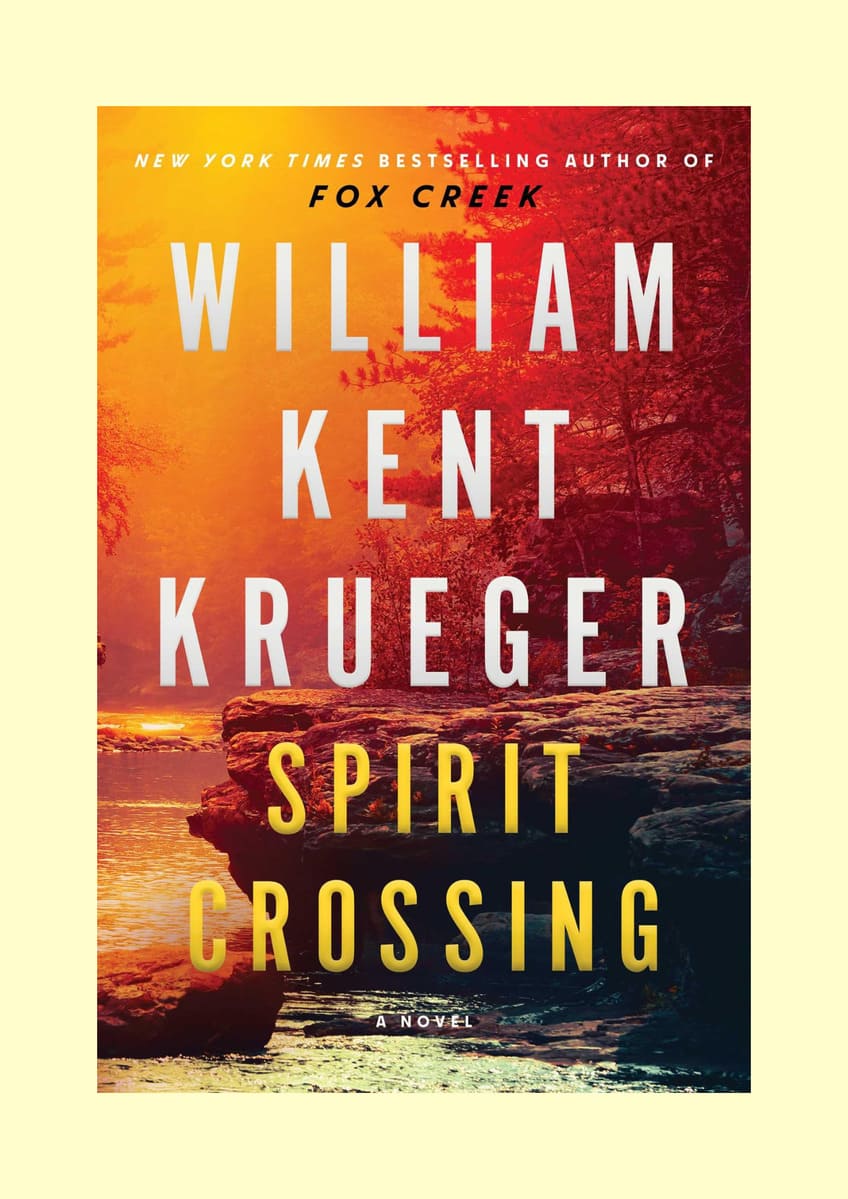
Spirit Crossing was first published by Atria Books on August 20, 2024, and is the twentieth novel in the Cork O’Connor Mysteries series. The book blends mystery, crime, and thriller elements and is primarily set in northern Minnesota.
The story begins with the disappearance of Olivia Hamilton, the teenage daughter of a prominent Minnesota politician. Her disappearance immediately becomes major news, triggering an extensive search operation.
Then Cork O’Connor and his family go blueberry picking, and Cork’s grandson, Waaboo, discovers a shallow grave.
The body inside is not Olivia.
It belongs to a young Ojibwe woman.
With that discovery, William Kent Krueger establishes the central contrast of Spirit Crossing: one missing girl comes from an influential family and receives an enormous commitment of resources, while another Indigenous woman can disappear without receiving anything close to the same level of attention.
Cork and the Iron Lake Ojibwe Tribal Police begin investigating, gradually discovering that the death may connect to something much more dangerous. Meanwhile, Waaboo appears to have an unusual connection with the dead woman, and what the boy knows—or senses—could potentially place him in danger.
Running alongside the investigation is a dispute involving a pipeline crossing sacred Ojibwe land, as well as major developments within the O’Connor family. The title “Spirit Crossing” therefore carries several meanings, touching on the land, death, spirituality, and the passage between worlds.
The novel became an instant New York Times bestseller. At the time of research for this Review, Spirit Crossing held an average Goodreads rating of approximately 4.14 out of 5 from more than 19,000 ratings, indicating a notably strong response for the twentieth installment of a long-running series.
No reliable official sales figure could be verified, so it would be misleading to provide a specific number of copies sold. Similarly, awards earned by William Kent Krueger during his career should not be confused with awards specifically received by Spirit Crossing.
4. Review of the Book: Spirit Crossing
The first major strength of Spirit Crossing is embedded in its premise.
William Kent Krueger does not need an eccentric serial killer or an impossibly elaborate murder method to give the story emotional weight. He simply places two missing people beside each other.
One commands the attention of the system.
The other has nearly been forgotten.
That imbalance immediately transforms the novel from a conventional “Who is the killer?” mystery into a much more uncomfortable question: Do race, social status, political influence, and family background affect how seriously society treats a missing or murdered person?
That question is why any meaningful Spirit Crossing Review needs to look beyond the plot twists.
A Mystery With Multiple Layers
The investigation in this Book is relatively complex. As the identity of the woman found in the shallow grave becomes clearer and Olivia’s disappearance continues to develop, storylines that initially seem separate begin moving toward one another.
Krueger is particularly effective at changing the question the reader is trying to answer.
First: Who is the dead woman?
Then: What happened to Olivia?
Next: Are the two cases connected?
Eventually, an even more alarming question emerges: What does Waaboo know that could put him in danger?
Suspense therefore develops not only through direct confrontation but through the gradual convergence of seemingly unrelated pieces.
Publishers Weekly described the story as “one of his most puzzling mysteries to date” while also praising the haunting atmosphere Krueger sustains throughout the novel.
Minnesota Is More Than a Setting
One of the aspects I appreciate most about Spirit Crossing is the way its landscape becomes part of the mystery itself.
Forests, lakes, isolated cabins, Indigenous lands, and the feeling that something dangerous might be hiding beneath an otherwise peaceful landscape create tension without requiring constant violence.
Minnesota Monthly praised Krueger’s immersive setting and emotionally resonant mystery, while The Real Book Spy characterized the novel as a powerful example of suspense and atmospheric storytelling.
This is the kind of Book in which location becomes nearly as important as the characters.
The O’Connor Family Adds Depth—But Also Complexity
Another major strength is that Cork does not exist as a detective isolated from his personal life.
The O’Connor family is deeply involved in the story. Waaboo becomes directly connected to the mystery, while Annie returns home carrying important news of her own. These developments make the stakes much more personal for Cork.
But this also contributes to one of the Book’s weaknesses.
Spirit Crossing simultaneously deals with a disappearance, a murder investigation, the Iron Lake Ojibwe Tribal Police, Waaboo, Annie, the wider O’Connor family, a pipeline dispute, Indigenous issues, and spiritual elements.
For longtime readers, that creates a richly developed world.
For newcomers, the number of characters and subplots can occasionally feel overwhelming.
Some listener reviews have similarly criticized the number of simultaneous crises and the relatively slow pace of certain sections. That criticism is reasonable. Readers expecting a thriller that accelerates continuously from its opening chapter to the finale may find Spirit Crossing slower than expected.
The Spiritual Element Is Fascinating but Divisive
Waaboo can sense things that other people cannot. Krueger leaves these experiences somewhere between intuition, Ojibwe spirituality, and the supernatural.
For me, this works with the atmosphere of the Book because Krueger never transforms the story into outright fantasy. Instead, spirituality provides another mysterious layer to a fictional world already deeply connected with nature, death, and cultural tradition.
Readers who prefer strictly realistic police procedurals may disagree. When part of a mystery involves the apparently supernatural perceptions of a child, acceptance will depend heavily on individual taste.
Notable Critical Reactions
The Los Angeles Times has praised Krueger’s prose, characterization, and ability to bring the Minnesota Northwoods vividly to life.
Publishers Weekly highlighted the eerie tone of Spirit Crossing and Krueger’s use of subtle supernatural elements within the mystery.
The Real Book Spy called the novel a “masterclass in suspense and atmospheric storytelling.”
The Denver Post observed that even after twenty installments, the Cork O’Connor books continue to improve, while praising the elegance of Krueger’s writing.
Bestselling novelist Kristin Hannah has also described William Kent Krueger as a “master storyteller at the top of his game.”
My Personal Take
If I had to choose one reason to read Spirit Crossing, it would not simply be the question of who committed the crime. It would be the contrast between the two victims. A good mystery makes me want to discover the truth; a memorable mystery makes me continue thinking about that truth after I close the Book. Spirit Crossing comes close to achieving the latter. Krueger uses crime to explore family, community, prejudice, and the people who can become nearly invisible to society. The story is occasionally slow and crowded with characters, but that same depth helps it rise above the formula of an ordinary thriller.
5. Review of the Audiobook: Spirit Crossing
The Spirit Crossing Audiobook was released on August 20, 2024, is narrated by David Chandler, and runs for approximately 10 hours and 2 minutes. It is an unabridged recording.
If the printed Book derives much of its strength from atmosphere, the Audiobook has a particular advantage in this area.
David Chandler has the kind of voice that does not need to manufacture suspense in every sentence. The quieter moments in his narration create the feeling of being led deeper into the woods rather than constantly being pushed forward by an exaggerated thriller performance.
That style is particularly appropriate for Cork O’Connor.
Cork has endured years of loss, conflict, and personal upheaval. An excessively fast or theatrical performance could undermine the character’s sense of experience and maturity. Chandler maintains the steadiness Cork requires.
During the chapters involving Waaboo and the story’s spiritual elements, Chandler’s restraint also helps preserve ambiguity. Listeners are free to interpret Waaboo’s experiences as intuition, spirituality, or something genuinely supernatural.
Strengths of the Audiobook
The biggest strength is the consistency between narrator and fictional world.
David Chandler has been associated with Cork O’Connor for many years, so listeners familiar with previous Audiobooks may experience his return as a homecoming to a recognizable world.
Audible listener feedback highlights qualities such as “Engaging Mystery,” “Rich Cultural Elements,” “Excellent Narration,” “Vivid Setting Descriptions,” and “Complex Family Dynamics.”
A Goodreads listener who rated the Book 4.5 stars specifically described David Chandler’s audio performance as “exceptional.”
Audiobooks.com listener feedback has likewise described Chandler as “as always, excellent,” suggesting continued enthusiasm among longtime followers of the series.
Weaknesses of the Performance
The primary area of disagreement concerns character voices.
Some Audible listeners have praised Chandler’s normal narrative voice while criticizing the intonation he uses for certain characters as unnatural.
This distinction matters because narration and character acting are related but separate skills.
Chandler is particularly effective at storytelling, atmosphere, and embodying Cork’s mature presence. Listeners who expect every character to receive a highly naturalistic, dramatically distinctive voice may respond differently.
There is no reliable standalone professional critic score for Chandler’s Spirit Crossing performance that can be verified, so assigning one would be misleading. However, listener reactions across Audible, Goodreads, and Audiobooks.com lean clearly positive.
Google Play has also listed the Audiobook at 5.0 out of 5, although this was based on only three ratings at the time of research, far too small a sample to represent the broader audience.
My Personal Take on the Audiobook
If I had to choose between reading and listening to Spirit Crossing, I would lean slightly toward the Audiobook for anyone already familiar with Cork O’Connor. David Chandler does not attempt to transform the novel into an action movie through sound. Instead, he allows Krueger’s setting, characters, and underlying unease to do the work. That approach is particularly effective during scenes in the wilderness and passages involving spirituality. The character voices may not satisfy every listener, but overall, Chandler’s mature delivery and measured pacing fit a story that is simultaneously a murder mystery, social commentary, and family drama.
6. Target Audience for This Book
Spirit Crossing is particularly well suited to readers who enjoy mystery and thriller fiction but want more than a simple hunt for a murderer. If you prefer novels in which a crime opens the door to larger ethical and social questions, this is an excellent candidate.
Fans of atmospheric mysteries should also find plenty to appreciate. William Kent Krueger devotes significant attention to Minnesota’s forests, lakes, wilderness, and weather, allowing the setting to become an essential part of the reading experience.
Longtime Cork O’Connor fans are likely to gain the most from the Book because the family relationships and character histories carry additional emotional weight after following these people across many novels.
Newcomers can still begin with Spirit Crossing. Krueger provides enough context to understand the important relationships, although some emotional moments inevitably have greater impact for longtime readers.
Readers interested in Ojibwe culture, the issue of missing and murdered Indigenous women, conflicts surrounding land, and inequalities in how society responds to victims will also find substantial material to consider.
For Audiobook listeners, Spirit Crossing is particularly appropriate for those who prefer mature, restrained, atmospheric narration rather than heavily theatrical performances.
Conversely, readers looking exclusively for an extremely fast thriller with few subplots and absolutely no spiritual or supernatural elements may find it less suitable.
7. Conclusion
After twenty novels, the remarkable thing is not that William Kent Krueger can still invent another crime.
It is that he can still find a reason for that crime to matter.
Spirit Crossing is at its strongest when it places two disappearances beside one another and forces readers to confront the difference in how society responds to each victim.
It is a simple but powerful premise.
Beneath the mystery lies the story of Cork, Waaboo, Annie, and the O’Connor family; of the Ojibwe community; of land and belonging; and of death and the people who must continue living after loss.
The Book is not flawless. It carries a substantial number of subplots, the pacing slows in places, and its supernatural elements may divide readers. Yet these are also consequences of Krueger’s ambition to make the novel something more than a conventional murder mystery.
For longtime Cork O’Connor readers, Spirit Crossing is an important chapter in the series. For newcomers, it can serve as an introduction to William Kent Krueger’s fictional world. And for Audiobook fans, David Chandler’s performance provides another compelling reason to experience the story through audio.
If a mystery keeps you reading because you want to know who the killer is, it has done its job.
If you are still thinking about the victims after you know the killer’s identity, it has accomplished something more.
Spirit Crossing belongs much closer to the second category.
—
8. Where to Listen to the Audiobook
#CommissionsEarned
As an Amazon Associate I earn from qualifying purchases.
You can listen on the following platforms:
We recommend signing up for a membership to enjoy seamless access to this and many other high-quality audiobooks anytime, anywhere.




Reviews
There are no reviews yet.