

1. About the Author: John Sandford
John Sandford is one of the most recognizable names in contemporary American crime fiction and psychological thrillers. Born John Roswell Camp on February 23, 1944, in Cedar Rapids, Iowa, Sandford established himself as an accomplished journalist long before becoming an internationally successful novelist. His professional background includes working for major newspapers such as The Miami Herald and The St. Paul Pioneer Press, where he developed the observational skills and storytelling techniques that would later become central to his fiction.
In 1986, Sandford received the Pulitzer Prize for Feature Writing for a series of articles examining the lives of an American farming family during the agricultural crisis. This achievement demonstrated his exceptional ability to capture social realities, human struggles, and complicated relationships through vivid, carefully observed details. These qualities would eventually distinguish his crime novels from more conventional thrillers.
Sandford began his career as a novelist in the late 1980s, achieving his breakthrough with Rules of Prey, published in 1989. The novel introduced Lucas Davenport, an intelligent, determined, and occasionally ruthless investigator who would become the central character of Sandford’s long-running Prey series.
Over the following decades, Sandford expanded the series with numerous successful titles, including Winter Prey, Certain Prey, Mortal Prey, and Buried Prey. His ability to balance suspenseful criminal investigations with memorable characters helped establish him as a major figure in American thriller fiction.
The success of the Prey novels also created opportunities for Sandford to explore new characters within the same fictional universe. One of his most successful creations was Virgil Flowers, an investigator whose personality contrasts sharply with that of Lucas Davenport.
While Davenport is often direct, commanding, and willing to confront danger head-on, Virgil Flowers approaches investigations with a relaxed attitude, sharp observational skills, and a dry sense of humor. His casual appearance and love of fishing frequently disguise his considerable investigative intelligence.
This contrast gives the Virgil Flowers series a distinctive identity. Rather than simply repeating the formula that made the Prey novels popular, Sandford developed a protagonist whose greatest strengths often involve patience, communication, and an intuitive understanding of human behavior.
One of the defining characteristics of John Sandford’s writing is his ability to transform apparently ordinary situations into complex criminal investigations. His stories rarely depend exclusively on identifying a murderer. Instead, they examine criminal motivations, psychological conflicts, social pressures, and the unexpected consequences of seemingly insignificant decisions.
Sandford’s dialogue is another notable strength. His characters speak naturally, frequently using humor, sarcasm, or understated remarks to reveal their personalities. Meanwhile, the investigative process unfolds through carefully connected clues, interviews, and discoveries rather than improbable moments of sudden inspiration.
The American Midwest also plays an essential role in his novels. Rural landscapes, local traditions, farming communities, and longstanding personal relationships give his stories a strong sense of place.
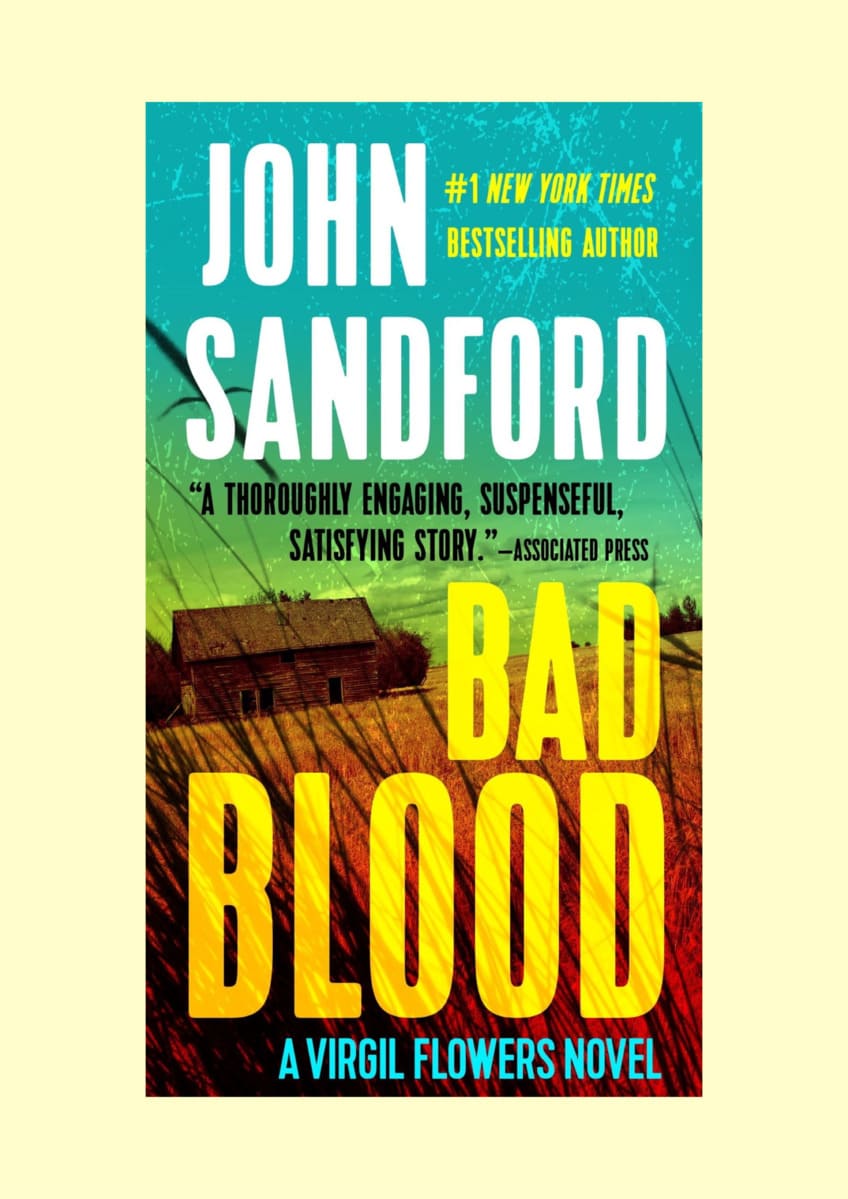
In Bad Blood, these strengths come together in one of the darkest investigations of Virgil Flowers’ career. Sandford explores how an apparently respectable community can conceal horrifying crimes when loyalty, fear, and silence become more powerful than justice.
The novel demonstrates why John Sandford remains admired not simply as a bestselling thriller writer but as a storyteller capable of combining entertainment with compelling psychological and social observations.
2. About the Audiobook Narrator: Eric Conger
Eric Conger is an experienced American audiobook narrator, voice actor, and stage performer whose work spans multiple literary genres, including crime fiction, thrillers, science fiction, history, and nonfiction.
Before establishing himself as an audiobook narrator, Conger developed an extensive background in professional theater. He has appeared in more than 50 stage productions and participated in numerous commercial voice-over projects. His academic background includes studies at Wesleyan University and the University of Paris, while his theatrical experience also extends to translating works by French playwrights such as Molière and Georges Feydeau.
This combination of theatrical training, literary understanding, and professional voice work has contributed to his reputation as a versatile narrator capable of handling complex characters and emotionally demanding material.
Conger is particularly well known among John Sandford fans for his extensive involvement with the Virgil Flowers audiobook series. He has narrated several installments, including Dark of the Moon, Heat Lightning, Rough Country, Bad Blood, and Shock Wave.
His recurring role as the voice of Virgil Flowers provides an important advantage for listeners following the series. Rather than adjusting to a new narrator with each installment, audiences can experience the character’s development through a familiar vocal interpretation.
Eric Conger’s narration is generally characterized by clarity, controlled pacing, and natural emotional expression. Instead of treating every conversation as an opportunity for dramatic vocal performance, he often uses subtle changes in tone and rhythm to communicate a character’s intentions.
This approach is particularly effective in crime fiction, where seemingly ordinary conversations may contain important investigative clues.
In John Sandford’s novels, Conger captures the contrast between Virgil Flowers’ relaxed personality and the dangerous situations surrounding him. His measured delivery complements Virgil’s dry humor and practical intelligence while allowing increasingly disturbing revelations to create their own emotional impact.
Conger’s professional achievements have also attracted recognition from audiobook critics. His narration credits include productions that have received AudioFile Earphones Awards, including Avenger by Frederick Forsyth.
AudioFile has praised his narration with the memorable words:
“Simply the best.”
Although this praise reflects Conger’s broader audiobook work rather than an award specifically given to Bad Blood, it illustrates the professional recognition he has received throughout his career.
For the Bad Blood Audiobook, Conger’s experience becomes especially valuable. The novel includes numerous characters, interconnected relationships, and revelations that depend on careful attention to dialogue. His restrained but expressive narration helps listeners navigate these complexities without overwhelming the story itself.
3. About the Book: Bad Blood by John Sandford
Bad Blood is a crime thriller originally published on September 21, 2010, by G. P. Putnam’s Sons. It is the fourth novel in the Virgil Flowers series, following Dark of the Moon, Heat Lightning, and Rough Country.
The book combines elements of mystery, suspense, police procedural fiction, and psychological crime drama. Set primarily in rural southern Minnesota, it explores an investigation that gradually exposes a network of crimes extending far beyond an initial murder.
The story begins when a young man named Robert Tripp attacks and kills farmer Jacob Flood at a grain-handling facility. Tripp attempts to make the death look like an industrial accident, but suspicious evidence quickly leads investigators to recognize the crime as murder.
Tripp is arrested, seemingly bringing the investigation toward a straightforward conclusion. However, before authorities can fully establish his motive, he is found dead in his jail cell.
Local sheriff Lee Coakley becomes suspicious of the circumstances surrounding his death. She believes that the case involves more than an isolated act of violence and begins questioning whether someone is deliberately preventing the truth from emerging.
Recognizing the seriousness of the situation, Coakley requests assistance from Virgil Flowers, an experienced investigator with the Minnesota Bureau of Criminal Apprehension.
What follows is a complicated investigation involving conflicting testimony, suspicious relationships, and disturbing connections between events separated by many years.
As Virgil pursues new leads, he begins uncovering evidence suggesting that multiple individuals may be involved in protecting a deeply entrenched criminal system. Families with longstanding influence, a tightly controlled religious community, and unwritten rules of silence create formidable obstacles to his investigation.
The central mystery gradually becomes something much larger than identifying the individuals responsible for a series of deaths. Virgil must determine how these crimes have remained concealed, why so many people are reluctant to speak, and what dangers may still threaten vulnerable members of the community.
One of the novel’s defining themes is the relationship between power and silence.
Sandford explores how harmful behavior can persist when individuals prioritize family loyalty, social pressure, or institutional survival over justice. The book also examines the manipulation of religious authority, the consequences of abuse, and the moral responsibility of people who know about wrongdoing but choose not to intervene.
The rural Minnesota setting enhances these themes. Farms, isolated roads, small towns, and closely connected families create an atmosphere of familiarity. Yet the same environment becomes increasingly unsettling as Virgil discovers that apparent respectability may conceal deeply disturbing behavior.
Unlike many conventional murder mysteries, Bad Blood is not concerned exclusively with keeping the killer’s identity secret until the final pages. The novel also emphasizes the investigative challenge of obtaining evidence, protecting potential victims, and confronting individuals who have powerful reasons to obstruct the truth.
Ratings, Awards, and Recognition
Bad Blood has received generally positive reviews from readers and audiobook listeners.
At the time of the ratings referenced for this review, the book had an average rating of approximately 4.22 out of 5 stars on Goodreads, based on more than 33,000 reader ratings.
The audiobook edition narrated by Eric Conger had an overall rating of approximately 4.4 out of 5 stars on Audible, based on nearly 4,500 listener ratings.
These figures may change as additional readers and listeners submit reviews.
An especially significant achievement came in 2011, when Bad Blood won the International Thriller Writers Award for Best Hardcover Novel. The recognition placed the book among the notable thriller publications of its period and reinforced John Sandford’s reputation as a leading crime fiction author.
The novel also appeared on major American bestseller lists, including those published by The New York Times and USA Today. However, a reliable standalone sales figure for Bad Blood is not publicly established.
The unabridged Bad Blood Audiobook, narrated by Eric Conger and published by Penguin Audio, runs approximately 9 hours and 44 minutes. An abridged edition of approximately 5 hours and 47 minutes has also been released.
For listeners who want the complete investigative experience, the unabridged edition is generally the better choice.
4. Bad Blood Book Review: A Murder Mystery That Exposes the Darkness Within a Community
A Layered Crime Story Filled With Suspense and Investigative Detail
One of the greatest strengths of Bad Blood is John Sandford’s ability to construct a layered and constantly evolving crime story.
From the opening chapters, readers are presented with a murder that appears relatively easy to solve. The person responsible for Jacob Flood’s death is identified quickly, the circumstances seem understandable, and the case initially resembles a routine homicide investigation.
However, the suspicious death of the primary suspect immediately changes the nature of the story.
Rather than relying on a conventional mystery in which every important fact remains hidden until the conclusion, Sandford gradually expands the significance of information already presented. Each new witness, family connection, and historical event adds another dimension to the investigation.
Readers slowly discover that the original murder may represent only a small part of a much larger criminal conspiracy.
This method of storytelling creates suspense through accumulating knowledge. The more Virgil discovers, the more dangerous the situation becomes.
Sandford is particularly effective at portraying the practical realities of criminal investigation. Virgil does not solve the case through miraculous intuition or conveniently appearing evidence. Instead, he interviews witnesses, examines conflicting accounts, identifies relationships, and tests his suspicions against available facts.
Apparently ordinary conversations can become crucial turning points. A seemingly insignificant detail may reveal a contradiction, while an unexpected connection between two individuals may lead investigators toward a much more serious discovery.
For readers who appreciate police procedural fiction, this attention to investigative detail is a major advantage.
Bad Blood demonstrates that identifying a likely suspect is not the same as establishing a prosecutable case. Virgil must uncover reliable evidence, understand the structure of the criminal network, and determine how to prevent further harm.
The investigation therefore becomes both an intellectual challenge and an increasingly dangerous confrontation.
However, this structure also introduces a potential weakness.
Unlike classic whodunit mysteries that maintain uncertainty about the culprit until the final chapters, Bad Blood reveals several important aspects of its central conspiracy relatively early.
The later stages focus more heavily on gathering evidence, confronting suspects, and overcoming resistance.
Readers who prefer a final, completely unexpected revelation may find this approach less satisfying. Those who enjoy the procedural aspects of criminal investigations, however, are more likely to appreciate the shift in emphasis.
Virgil Flowers: An Unconventional Investigator With Remarkable Depth
Another major reason for the success of Bad Blood is its distinctive protagonist.
Virgil Flowers does not resemble the stereotypical hard-boiled detective who relies on intimidation, aggression, and a permanently serious attitude.
Instead, he approaches investigations with curiosity, patience, humor, and an apparently relaxed manner.
His casual appearance and conversational personality often cause people to underestimate him. Yet beneath that easygoing exterior is an exceptionally observant investigator who understands how human behavior can reveal concealed motives.
This ability becomes particularly important in the rural community at the center of Bad Blood.
Residents of small towns may be reluctant to cooperate with outside authorities, especially when an investigation threatens longstanding relationships and local institutions. Virgil recognizes that forcing people into confrontations is not always the most effective way to uncover information.
He frequently relies on patience, careful questioning, and subtle observations to encourage people to reveal more than they initially intended.
His humor also provides important moments of relief in an otherwise disturbing story.
However, Sandford does not allow Virgil’s relaxed personality to undermine the seriousness of the investigation. As evidence of increasingly terrible crimes emerges, Virgil demonstrates a strong moral commitment to protecting vulnerable individuals and pursuing justice.
This contrast makes him a convincing and memorable protagonist.
He is neither emotionally detached nor unrealistically heroic. He reacts to disturbing information as a human being while continuing to carry out his professional responsibilities.
Sheriff Lee Coakley is another important character.
Rather than functioning merely as a supporting figure who introduces Virgil to the case, Coakley has her own professional challenges, political pressures, and concerns about the integrity of local law enforcement.
Her decision to pursue the suspicious jailhouse death reflects both determination and a willingness to question circumstances that others might prefer to ignore.
The working relationship between Coakley and Virgil adds another dimension to the novel. Their exchanges combine professional cooperation, mutual respect, and occasional personal chemistry, providing a counterbalance to the darker aspects of the investigation.
Rural Minnesota: A Peaceful Landscape Concealing Horrifying Secrets
One of the most effective elements of Bad Blood is John Sandford’s use of setting.
Instead of relying on a dangerous metropolitan environment, the author places much of the story in rural Minnesota, where farms, grain facilities, quiet roads, and established family relationships create an atmosphere of apparent normality.
At first glance, the setting seems almost reassuring.
People know their neighbors. Families have lived in the area for generations. Community institutions appear stable and familiar.
Yet these same characteristics gradually become sources of unease.
In a closely connected community, secrets can survive because individuals fear social exclusion, family consequences, or retaliation. Personal loyalty can prevent witnesses from speaking openly, while longstanding relationships may protect individuals who should be held accountable.
Sandford explores this contradiction with considerable skill.
The reader begins questioning not only the actions of obvious suspects but also the behavior of apparently ordinary residents.
An evasive answer, an unusually strong emotional reaction, or a refusal to discuss the past may carry more significance than it initially appears.
This atmosphere gives Bad Blood elements of a psychological thriller, even though the novel primarily follows the structure of a police investigation.
The fear is not generated solely through violence or physical danger.
It also comes from the possibility that seemingly respectable people may know far more than they are willing to admit.
Moral Questions Beyond the Murder Investigation
Although Bad Blood is clearly a crime thriller, its thematic concerns extend beyond the mechanics of solving a murder.
One of its most important subjects is complicity through silence.
When criminal behavior occurs inside a community shaped by strong family obligations and social expectations, exposing wrongdoing can threaten relationships that individuals have depended on throughout their lives.
Sandford examines how such pressures may discourage people from speaking, even when they recognize that serious harm is occurring.
The novel suggests that entrenched systems of abuse can survive not only because of those who directly commit crimes but also because others choose to ignore warning signs or protect powerful individuals.
Another major theme is the manipulation of authority and trust.
Institutions that are supposed to provide guidance, protection, or moral structure can become dangerous when individuals use their positions to control others.
In Bad Blood, Sandford explores the consequences of allowing an insulated group to operate without meaningful accountability.
Importantly, the novel’s central criticism should not be interpreted as a blanket condemnation of religious belief or community life.
Its deeper concern is the exploitation of trust, the abuse of authority, and the harm caused when a group places its own preservation above the safety and dignity of individuals.
These themes give the novel psychological and social significance beyond its entertainment value.
Readers are encouraged to consider not only who committed the crimes but also how such behavior could remain concealed for so long.
What Professional Critics Say About Bad Blood
Bad Blood received attention from several established literary review publications.
In its August 2010 review, Publishers Weekly described the novel as an:
“Exciting fourth thriller”
The publication praised the expanding scope of Virgil Flowers’ investigation while also acknowledging the somewhat improbable scale of the conspiracy.
The review highlighted Sandford’s ability to develop what initially appears to be a routine murder case into a far more disturbing criminal investigation.
Booklist also responded positively to the novel, emphasizing the combination of suspense, action, humor, and character relationships that readers had come to associate with Sandford’s work.
Its assessment suggested that the book successfully maintained the distinctive appeal of Virgil Flowers even while moving into particularly dark subject matter.
However, critical opinion was not universally positive.
Kirkus Reviews characterized the novel as:
“Lurid and overscaled.”
This criticism identifies one of the book’s most debatable qualities.
The conspiracy uncovered during the investigation is exceptionally extensive, and some readers may consider its scale difficult to believe.
The novel’s treatment of disturbing crimes may also feel sensationalized to readers who prefer a more restrained approach to difficult subjects.
Reader reviews reflect similar differences in opinion.
Many praise Sandford’s complex storytelling, the intelligence of Virgil Flowers, and the gradual revelation of concealed relationships.
Others find the themes involving sexual violence and child abuse so disturbing that they overshadow the humor and entertainment value traditionally associated with the series.
These contrasting responses suggest that Bad Blood is a powerful but potentially divisive thriller.
Weaknesses and Potential Drawbacks
Despite its strengths, Bad Blood is not without limitations.
The most significant concern is the severity of its subject matter.
The novel includes themes involving sexual abuse, violence against children, incest, manipulation, and deeply disturbing criminal behavior.
For sensitive readers, these elements may make the experience emotionally uncomfortable.
This is not a lighthearted mystery designed primarily for relaxation.
Another potential weakness is the scale of the conspiracy.
Although Sandford generally demonstrates a strong understanding of police investigations and regional settings, the extent of the crimes uncovered in Bad Blood may stretch credibility for some readers.
The narrative also contains sections devoted to interviews, evidence gathering, and procedural developments rather than constant action.
Readers seeking a fast-paced thriller filled with uninterrupted confrontations and surprising twists may occasionally find the pacing slower than expected.
Nevertheless, these limitations do not erase the novel’s considerable achievements.
Its recognition with the 2011 International Thriller Writers Award for Best Hardcover Novel demonstrates the strong impression it made within the thriller genre.
Personal Perspective: Why Bad Blood Is Worth Reading
In my assessment, the greatest strength of Bad Blood is not the shocking nature of its crimes but the way John Sandford transforms an apparently straightforward murder into a compelling examination of responsibility and collective silence. Virgil Flowers is particularly engaging because he does not need to appear intimidating to demonstrate intelligence, determination, or courage. His patience and humanity give the investigation emotional weight. Although the novel’s disturbing themes may challenge some readers, they also make its central questions difficult to forget. For anyone who appreciates character-driven crime fiction with psychological depth, Bad Blood offers a memorable reading experience that extends beyond the mystery itself.
5. Bad Blood Audiobook Review: Eric Conger’s Compelling Performance
A Natural Narration Style That Captures Virgil Flowers
One of the strongest aspects of the Bad Blood Audiobook is the compatibility between Eric Conger’s narration and the personality of Virgil Flowers.
Unlike fictional investigators who are constantly aggressive, tense, or openly confrontational, Virgil often maintains a relaxed attitude even when the circumstances around him become dangerous.
His intelligence is frequently expressed through subtle questions, dry humor, and careful observations rather than dramatic declarations.
Conger’s understated narration complements this characterization.
Instead of transforming every conversation into an elaborate vocal performance, he allows the dialogue and the personality of the characters to guide the listening experience.
The result is a style that feels natural and conversational.
This approach works particularly well with John Sandford’s writing, where important information is frequently hidden inside ordinary exchanges.
A brief remark, an unusual hesitation, or a seemingly insignificant response may become essential to the investigation.
Conger’s clear delivery allows listeners to recognize these details without becoming distracted by excessive vocal dramatization.
His interpretation also helps establish the contrast between Virgil’s casual manner and the seriousness of the crimes being investigated.
Moments of humor retain their natural rhythm, while more intense scenes benefit from the narrator’s ability to introduce tension without abandoning his established style.
Distinguishing Characters in a Complex Crime Thriller
Bad Blood includes a substantial supporting cast.
Police officers, witnesses, relatives, community members, and individuals connected to the central conspiracy all contribute information to the investigation.
For an audiobook narrator, this presents a significant challenge.
Unlike readers of a printed novel, audiobook listeners cannot always glance back at previous pages to confirm names or relationships.
A successful narration must therefore make conversations understandable while maintaining continuity across many chapters.
Eric Conger approaches this challenge through controlled differences in vocal tone, speaking rhythm, and characterization.
Rather than relying entirely on exaggerated accents, he uses subtle distinctions to help listeners recognize different personalities.
Virgil’s relaxed and frequently humorous manner contrasts with the guarded, defensive, or confrontational attitudes of other characters.
These differences help clarify the emotional dynamics of conversations while reinforcing the tension surrounding the investigation.
In its review of the audiobook, AudioFile Magazine praised Conger’s ability to distinguish characters and make a complicated narrative easier to follow.
This is particularly important because the significance of certain relationships may not become apparent until much later in the story.
Nevertheless, Bad Blood Audiobook still requires attention.
Listeners who regularly divide their concentration between several demanding activities may struggle to remember characters who appear briefly before returning in later chapters.
This difficulty reflects the complexity of Sandford’s plot as much as the limitations of audio storytelling.
Pacing, Atmosphere, and Emotional Control
Another notable strength of Eric Conger’s performance is his controlled approach to pacing.
He does not attempt to make every scene sound equally dramatic.
During investigative sequences, the narration remains relatively measured, allowing listeners to follow Virgil’s reasoning and absorb important information.
When the story moves toward dangerous confrontations or disturbing revelations, subtle changes in delivery help create a more urgent atmosphere.
This measured technique complements the novel’s rural Minnesota setting.
The landscapes and communities described by Sandford initially appear ordinary and peaceful. As the investigation unfolds, the contrast between that apparent normality and the crimes being uncovered becomes increasingly unsettling.
Conger’s restrained delivery reinforces this effect.
Rather than relying on constant dramatic intensity, he allows suspense to accumulate gradually.
This approach also proves valuable when narrating sensitive material.
Because Bad Blood deals with sexual violence, abuse, and crimes involving children, an excessively theatrical performance could risk making those scenes feel exploitative.
Conger’s generally controlled style allows the seriousness of the subject matter to emerge without unnecessary vocal exaggeration.
However, this narrative approach may not appeal equally to every listener.
Those who prefer cinematic audio productions featuring multiple performers, sound effects, and highly dramatic character voices may find the presentation relatively understated.
Bad Blood Audiobook is a traditional single-narrator production in which storytelling clarity and vocal characterization take priority over elaborate audio effects.
Professional Reviews and Audiobook Ratings
Eric Conger’s performance has received positive attention from audiobook reviewers.
In commentary reproduced by AudiobookStore, AudioFile Magazine praised Conger for:
“His usual splendid job”
The phrase reflects the reviewer’s appreciation for the consistency and quality of his narration.
AudioFile also highlighted his ability to guide listeners through the complex storyline, distinguish the characters, and communicate Virgil’s determination to resolve the case.
The review recognized the particularly disturbing nature of the plot while suggesting that Conger’s delivery helped sustain its emotional intensity.
On Audible, the Bad Blood Audiobook had an overall rating of approximately 4.4 out of 5 stars from nearly 4,500 listeners at the time of the referenced review data.
This is an encouraging indication of listener satisfaction, although the overall score reflects the complete audiobook experience rather than the narrator’s performance alone.
AudiobookStore has also displayed an overall listener rating of approximately 4.0 out of 5 stars, based on a larger collection of user ratings.
The site’s presentation of reviews from AudioFile, Publishers Weekly, and Booklist reinforces the generally favorable reception of the story and its audio adaptation.
Another audiobook review website, AudiobookSoul, awarded the production editorial scores of 4.0 out of 5 for the story and 4.0 out of 5 for narration.
Its review praised Conger’s ability to communicate the speech patterns associated with the American Midwest and maintain character distinctions throughout the investigation.
These scores are the assessments of that particular review site and should not be confused with official ratings from AudioFile Magazine.
Overall, the available professional feedback suggests that Conger’s narration is a notable strength of the audiobook rather than a distraction from Sandford’s storytelling.
Potential Weaknesses of the Audiobook
Although the narration is generally well received, several aspects of the Bad Blood Audiobook may not suit every listener.
The first is pacing.
Conger’s measured delivery complements the procedural structure of the novel, but listeners accustomed to extremely fast-paced thrillers may find certain investigative sequences relatively slow.
The story contains extended conversations, interviews, and discussions of evidence that require concentration.
Another potential difficulty is the complexity of the character relationships.
Important information sometimes appears in brief exchanges, and missing a seemingly minor detail can make later revelations harder to understand.
For this reason, the audiobook is better suited to attentive listening than to situations involving frequent interruptions or demanding multitasking.
The emotional intensity of the subject matter should also be considered.
Descriptions of violence, sexual abuse, and crimes against children may have an especially strong impact when delivered through spoken narration.
Listeners seeking a relaxing bedtime mystery may prefer a less disturbing title.
Finally, consumers should pay attention to the audiobook edition they purchase.
The unabridged version runs approximately 9 hours and 44 minutes, while an abridged edition is approximately 5 hours and 47 minutes long.
For a crime novel that depends heavily on the accumulation of evidence and the development of interconnected relationships, the complete edition offers the fullest experience.
Personal Perspective: Why the Bad Blood Audiobook Is Worth Listening To
In my view, the appeal of the Bad Blood Audiobook lies in how naturally Eric Conger’s narration complements John Sandford’s storytelling. His performance does not depend on constant dramatic intensity; instead, it emphasizes clarity, characterization, and the gradual development of suspense. This approach is especially appropriate for Virgil Flowers, an investigator whose greatest strengths often emerge through careful listening and observation. I would recommend the unabridged audiobook to listeners who appreciate detailed criminal investigations and understated narration. Although the subject matter is undeniably disturbing, Conger’s controlled performance helps preserve the novel’s psychological depth while making its complicated storyline more accessible.
6. Who Should Read or Listen to Bad Blood?
Bad Blood can appeal to several types of readers and audiobook listeners, particularly those interested in detailed crime investigations and psychologically complex thrillers.
However, the novel’s disturbing subject matter and procedural storytelling style make it better suited to mature audiences who are comfortable exploring serious themes.
Readers who enjoy crime thrillers, mystery fiction, and police procedurals are among the most obvious audiences for the book.
Unlike stories that focus almost entirely on physical confrontations or high-speed pursuits, Bad Blood emphasizes evidence gathering, witness interviews, and the gradual reconstruction of a complicated criminal conspiracy.
Fans of authors such as Michael Connelly and Lee Child may appreciate Sandford’s combination of investigative detail, memorable characters, and suspenseful storytelling.
Another suitable audience includes readers interested in criminal psychology and social dynamics.
Through its exploration of secrets concealed within a close-knit community, Bad Blood raises questions about power, loyalty, personal responsibility, and the psychological mechanisms that allow wrongdoing to continue.
Although the novel is a work of fiction rather than a personal development book, its themes can encourage reflection on manipulation, group pressure, and the consequences of refusing to confront harmful behavior.
Readers already familiar with John Sandford’s Prey series may also find Bad Blood particularly rewarding.
Virgil Flowers offers a different investigative personality from Lucas Davenport, and his relaxed manner creates an entertaining contrast with the dark circumstances of the story.
Although this is the fourth installment in the Virgil Flowers series, the central case is largely self-contained.
New readers can therefore follow the investigation without necessarily having read the previous novels. However, starting with Dark of the Moon may provide a stronger understanding of Virgil’s personality and recurring relationships.
The Bad Blood Audiobook is also a practical option for people who prefer listening to books during commutes, walks, household activities, or other routines.
Its approximately ten-hour running time makes it possible to experience the novel across multiple listening sessions.
Eric Conger’s clear narration helps maintain continuity, although listeners should avoid overly distracting activities during important investigative passages.
On the other hand, Bad Blood is not recommended for children or readers seeking a light, comforting mystery.
The story includes themes involving child sexual abuse, incest, coercion, and severe violence.
Anyone who finds these topics distressing should consider the content carefully before purchasing either the printed book or the audiobook.
7. Conclusion: Is Bad Blood Worth Reading or Listening To?
Bad Blood: A Virgil Flowers Novel stands out as a memorable entry in John Sandford’s crime fiction catalog.
What begins as an apparently straightforward murder investigation gradually develops into a disturbing examination of secrets, power, and collective silence within a rural community.
The novel’s greatest strengths include its layered investigative structure, the engaging personality of Virgil Flowers, and Sandford’s ability to create suspense through seemingly ordinary conversations and relationships.
Beyond the immediate mystery, the story raises uncomfortable questions about responsibility, complicity, and the consequences of allowing powerful individuals or institutions to operate without accountability.
These themes give Bad Blood a sense of psychological depth that extends beyond the traditional conventions of crime fiction.
Although some readers may question the plausibility of the conspiracy or find the subject matter excessively disturbing, the novel’s positive reception and its 2011 International Thriller Writers Award for Best Hardcover Novel demonstrate its standing within the thriller genre.
The Bad Blood Audiobook, narrated by Eric Conger, provides an equally compelling way to explore the story.
Conger’s natural delivery, controlled pacing, and effective character distinctions complement John Sandford’s writing while helping listeners navigate the complicated investigation.
For audiobook enthusiasts who appreciate thoughtful narration rather than excessive dramatization, his performance is an important reason to consider the audio edition.
Ultimately, Bad Blood is worth exploring if you enjoy crime fiction that goes beyond identifying a murderer to examine the secrets people protect and the damage caused by remaining silent.
If the premise appeals to you, consider reading the opening chapters or listening to an audiobook sample before committing to the complete story.
The mystery begins with one shocking death, but its most unsettling discoveries lie far deeper beneath the surface.
8. Where to Listen to the Audiobook
#CommissionsEarned
As an Amazon Associate I earn from qualifying purchases.
You can listen on the following platforms:
We recommend signing up for a membership to enjoy seamless access to this and many other high-quality audiobooks anytime, anywhere.



Reviews
There are no reviews yet.