

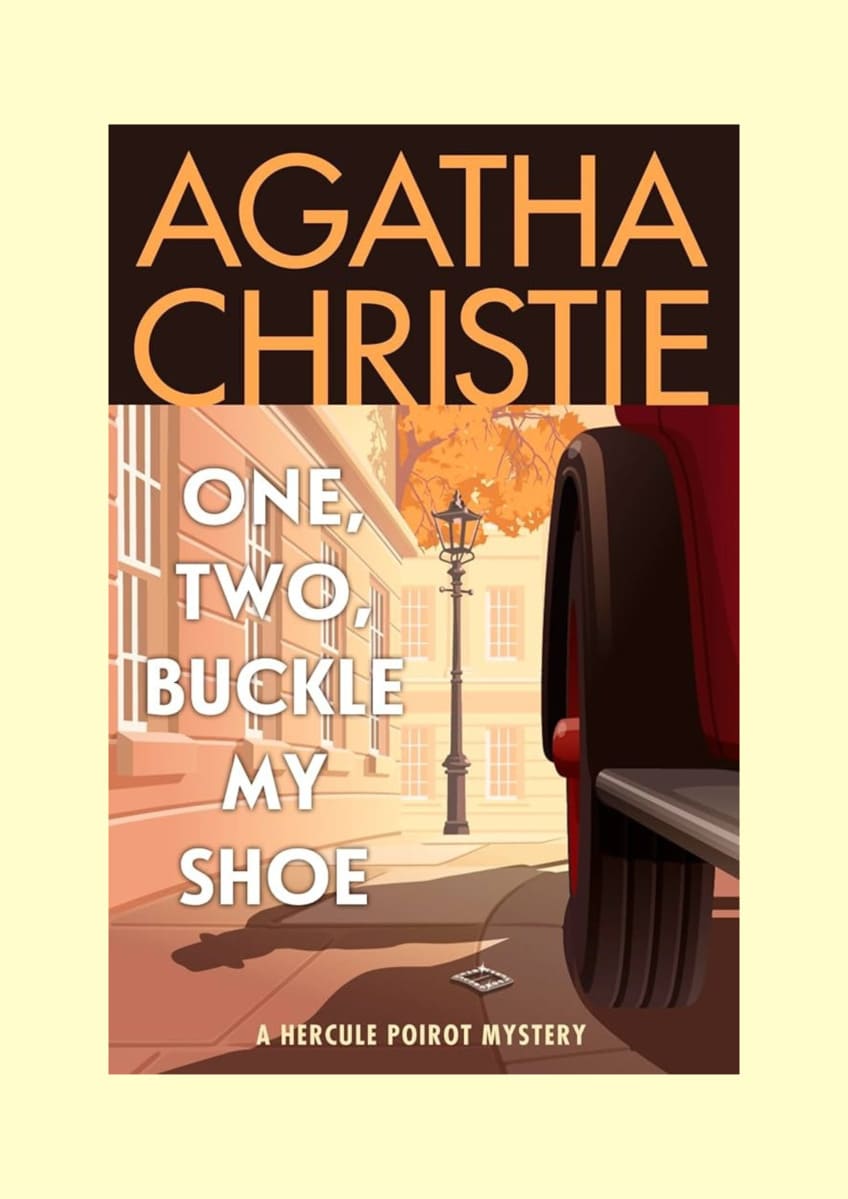

1. About the Author: Agatha Christie, the Queen of Crime
Agatha Christie (1890–1976) remains one of the most influential and successful mystery writers in literary history. Born in Torquay, England, she earned the celebrated title Queen of Crime through her extraordinary ability to construct complicated mysteries, develop memorable characters, and surprise readers with ingenious solutions.
Over a writing career spanning more than five decades, Christie produced 66 detective novels, 14 short-story collections, and numerous plays. Her works have sold more than two billion copies worldwide, establishing her among the bestselling fiction authors of all time.
Her literary legacy is closely associated with two legendary fictional detectives: Hercule Poirot, the brilliant Belgian investigator renowned for his logical reasoning and understanding of human psychology, and Miss Marple, an observant elderly woman whose knowledge of human nature allows her to uncover extraordinary secrets.
Some of Agatha Christie’s most celebrated books include:
- The Murder of Roger Ackroyd (1926): A groundbreaking detective novel known for its innovative narrative technique and unforgettable twist.
- Murder on the Orient Express (1934): A fascinating murder investigation aboard a luxurious train, where every passenger becomes a potential suspect.
- Death on the Nile (1937): A gripping mystery involving jealousy, romance, betrayal, and murder against the atmospheric backdrop of Egypt.
- And Then There Were None (1939): A suspenseful psychological mystery in which ten strangers find themselves trapped on an isolated island.
- The ABC Murders (1936): An ingenious investigation into a series of murders seemingly organized according to the alphabet.
Agatha Christie’s Distinctive Writing Style
One of Christie’s greatest strengths is her ability to transform ordinary details into crucial pieces of evidence.
An apparently meaningless conversation, a misplaced object, or an unexpected emotional reaction may eventually become the key to solving an entire mystery.
Her storytelling combines carefully structured puzzles with psychological observation. Rather than relying exclusively on physical evidence, Christie examines the emotions, motivations, and contradictions that influence human behavior.
Greed, jealousy, love, fear, ambition, and the desire for power frequently lie beneath the surface of her mysteries.
She also excels at misdirection, presenting clues that appear to suggest one explanation while subtly preparing readers for an entirely different conclusion.
In One, Two, Buckle My Shoe, these trademark techniques are combined with political and philosophical questions, giving the story a somewhat different atmosphere from many traditional Hercule Poirot mysteries.
The novel demonstrates that Agatha Christie was interested not only in identifying criminals but also in exploring the moral consequences of crime and punishment.
Her enduring popularity has led to countless adaptations, including films, television productions, radio dramas, and Audiobook editions that continue introducing her work to new generations.
2. About the Narrator: Hugh Fraser and His Connection to Hercule Poirot
Hugh Fraser is a British actor, novelist, and audiobook narrator best known for portraying Captain Arthur Hastings in the acclaimed television series Agatha Christie’s Poirot, alongside David Suchet.
His long association with the television adaptation gave him a distinctive connection to Christie’s fictional world.
As Hastings, Fraser portrayed Poirot’s loyal companion, providing warmth, humor, and a contrasting perspective to the detective’s meticulous reasoning.
Beyond his work on Poirot, Fraser has appeared in numerous television and film productions, including the historical drama series Sharpe, in which he portrayed the Duke of Wellington.
He has also established himself as a crime novelist and an experienced narrator of Agatha Christie’s Audiobooks.
Hugh Fraser’s Audiobook Narration Style
Fraser’s narration is distinguished by clear pronunciation, controlled pacing, subtle emotional expression, and a refined British delivery.
Rather than exaggerating every dramatic moment, he frequently relies on carefully measured changes in tone to communicate suspense, uncertainty, or humor.
This restrained approach suits Christie’s writing particularly well.
Her mysteries depend heavily on dialogue, small behavioral observations, and seemingly insignificant details. An overly theatrical performance could distract listeners from the clues they need to follow.
Fraser instead allows the story to develop naturally while giving different characters recognizable voices and personalities.
His ability to distinguish between speakers is especially valuable in novels featuring numerous suspects, witnesses, and investigators.
In One, Two, Buckle My Shoe Audiobook, Fraser captures the contrast between Poirot’s occasionally amusing personal habits and the serious moral questions that emerge during the investigation.
His familiarity with the character and the period atmosphere contributes to a convincing listening experience.
Library Journal praised his narration, suggesting that his performance as an audiobook reader was even more impressive than his already memorable portrayal of Captain Hastings on television.
With his acting experience, precise delivery, and understanding of Christie’s fictional universe, Hugh Fraser is particularly well suited to narrating classic British detective fiction.
3. About One, Two, Buckle My Shoe: A Murder Mystery That Begins at the Dentist
One, Two, Buckle My Shoe is a detective novel by Agatha Christie, first published in the United Kingdom in 1940.
Featuring the legendary Belgian detective Hercule Poirot, the novel combines traditional murder investigation with psychological suspense, political intrigue, and questions about justice.
The book was also published in the United States under the titles The Patriotic Murders and later An Overdose of Death.
Plot Summary: A Dentist’s Death Raises Dangerous Questions
Hercule Poirot is famous for his immaculate appearance, precise habits, and exceptional powers of observation.
Yet even the great detective is not immune to ordinary human anxieties, particularly the unpleasant prospect of visiting the dentist.
After attending an appointment with Dr. Henry Morley in London, Poirot receives shocking news: the dentist who recently treated him has been discovered dead in his consulting room.
A gun found near the body initially suggests suicide.
However, certain details trouble Poirot, who suspects that the situation may be considerably more complicated.
When another patient is found dead following an apparent overdose of dental anesthetic, investigators consider a possible explanation: perhaps Dr. Morley accidentally caused his patient’s death and subsequently took his own life out of guilt.
But Poirot remains unconvinced.
As he examines the dentist’s appointments, investigates conflicting statements, and studies the people connected to the case, a much larger mystery begins to emerge.
The investigation eventually involves influential financial figures, individuals with suspicious backgrounds, and people whose political beliefs may give them powerful reasons to conceal the truth.
Even an apparently insignificant shoe buckle becomes an important clue.
What begins as a suspicious death in a dental office gradually develops into a complicated investigation involving money, political influence, secrets, and competing ideas of justice.
Historical Setting and Major Themes
Published in 1940, the novel reflects an era when Europe was experiencing profound political instability and the growing consequences of ideological conflict.
Christie incorporates these tensions into her mystery by introducing characters who represent competing attitudes toward social order, political change, and the responsibilities of powerful individuals.
The story raises several important questions:
- Can someone’s contribution to society justify protecting them from legal consequences?
- Should political stability ever take precedence over justice for an individual?
- How effectively can wealth, status, and influence conceal personal wrongdoing?
- What happens when revealing the truth threatens interests that extend far beyond the original crime?
Unlike detective stories focused exclusively on discovering the killer’s identity, One, Two, Buckle My Shoe also explores the consequences of pursuing justice.
Ratings, Publication Details, and Adaptations
A Goodreads listing for One, Two, Buckle My Shoe recorded 3.78 out of 5 stars from 47,983 ratings, alongside 3,402 written reviews, at the time the information was checked. This rating relates to the book listing rather than the Hugh Fraser Audiobook specifically.
Meanwhile, AudiobookStore listed an overall score of 4.12 out of 5 stars based on 16 listener ratings for the Official Authorized Edition narrated by Hugh Fraser.
The HarperAudio edition was released in the United States on July 3, 2012, as an unabridged recording. Audiobooks.com lists its running time as approximately 5 hours and 30 minutes, although some other editions have slightly different durations.
The story has also been adapted for television and radio, including a 1992 episode of Agatha Christie’s Poirot and a BBC Radio 4 dramatization broadcast in 2004.
There are no reliably verified standalone sales figures or major literary awards specifically associated with this particular novel.
Nevertheless, its continued publication, adaptations, and Audiobook releases demonstrate its lasting appeal among readers of classic detective fiction.
4. One, Two, Buckle My Shoe Book Review: An Ingenious Mystery with Divisive Twists
Plot and Mystery Construction: Turning Ordinary Details into Essential Clues
One of the most intriguing aspects of One, Two, Buckle My Shoe is Agatha Christie’s choice of setting.
A dental office is hardly the first location most readers would associate with a complicated murder conspiracy.
It is an ordinary environment in which patients place considerable trust in medical professionals and rarely question the activities taking place around them.
This everyday familiarity makes Dr. Morley’s mysterious death especially unsettling.
Christie does not immediately launch into a high-speed pursuit or a series of action-packed encounters.
Instead, she gradually constructs a puzzle involving contradictory statements, misleading assumptions, and increasingly suspicious relationships.
Initially, the case appears to have a straightforward explanation.
A dentist is discovered dead, another patient has apparently suffered a fatal anesthetic overdose, and investigators identify a theory that could connect both deaths.
However, as Poirot examines the evidence, the initial explanation becomes less convincing.
Every new discovery seems to introduce additional possibilities.
A witness may be withholding information. An apparently unrelated character might have a reason to lie. A minor observation could invalidate an entire chain of reasoning.
Christie expertly directs readers toward certain suspicions while quietly introducing evidence that may ultimately support a different interpretation.
This technique of literary misdirection is among the defining qualities of her detective fiction.
Another distinctive feature is the book’s structural connection to the traditional nursery rhyme One, Two, Buckle My Shoe.
Lines from the rhyme provide chapter headings and create an intriguing contrast between childhood innocence and the increasingly disturbing events of the investigation.
The shoe buckle itself also becomes relevant to the mystery, demonstrating Christie’s ability to turn an apparently trivial object into a meaningful element of the investigation.
Hercule Poirot: A Detective Confronting the Meaning of Justice
In many Agatha Christie novels, Hercule Poirot delights readers with his extraordinary intelligence, meticulous habits, and occasionally exaggerated confidence in his famous “little grey cells.”
In One, Two, Buckle My Shoe, however, the detective faces questions that extend beyond identifying a murderer.
The death of someone he encountered in an ordinary professional setting gives the investigation a more personal dimension.
Poirot refuses to accept convenient explanations simply because they appear logical at first glance.
He carefully examines inconsistencies and remains concerned with the value of individual human life.
His interactions with Chief Inspector Japp provide an engaging contrast between conventional police procedures and Poirot’s psychological approach to investigation.
Meanwhile, characters from the financial and political worlds introduce another dimension to the mystery.
They are not merely potential suspects; they also represent conflicting opinions about power, responsibility, and social stability.
However, the large cast creates one of the novel’s weaknesses.
Some supporting characters appear to exist primarily to serve the mystery’s complex structure rather than to develop into memorable individuals.
Readers may understand their significance to the investigation without necessarily forming a strong emotional connection with them.
Writing Style: Precise, Intelligent, and Carefully Misleading
Agatha Christie’s prose is generally direct and economical.
Rather than relying on elaborate descriptions or extended passages of introspection, she concentrates on dialogue, observations, and the logical development of the investigation.
Conversations that initially seem ordinary often contain information that becomes meaningful later.
Readers must pay attention not only to what characters say but also to what they avoid saying, how they respond to unexpected questions, and whether their statements are consistent with their actions.
This creates an intellectually engaging reading experience.
The plot resembles a complicated puzzle in which each new discovery changes the apparent relationship between earlier clues.
Christie also integrates political ideas into the mystery without completely abandoning the detective-story framework.
Disagreements about social responsibility, economic power, and political stability become relevant to the characters’ motivations and decisions.
As a result, One, Two, Buckle My Shoe offers more thematic substance than a straightforward murder puzzle.
Weaknesses: Excessive Complexity and Limited Emotional Depth
Despite its strengths, One, Two, Buckle My Shoe is not universally regarded as one of Christie’s finest novels.
The most frequently discussed criticism concerns its complicated plot.
The numerous characters, interconnected motives, and shifting lines of investigation can make the story difficult to follow.
Some misleading clues are cleverly constructed, while others may seem unnecessarily elaborate.
Readers who prefer detective stories with a smaller number of suspects and a more straightforward progression may find the investigation occasionally frustrating.
The political and financial material can also interrupt the momentum of the central mystery.
Although these subjects add thematic depth, they sometimes compete with the immediate question of who committed the crime.
Another limitation is the relatively restrained emotional development of several supporting characters.
Their roles in the puzzle may be important, but their personalities are not always explored in sufficient detail to make them particularly memorable.
Modern readers may also encounter attitudes and stereotypes associated with the social conventions of early twentieth-century Britain.
While these elements reflect aspects of the novel’s historical context, they may feel uncomfortable or outdated to contemporary audiences.
What Critics Say About One, Two, Buckle My Shoe
The novel attracted considerable attention when it was originally published.
In a review published in The New York Times Book Review on March 2, 1941, critic Kay Irvin praised the novel’s complex plotting and brisk storytelling, noting its ability to maintain suspense through to the final revelation.
A contemporary assessment from The New York Herald Tribune described the novel with the memorable words:
“This is major Christie.”
The comment reflects the admiration generated by Christie’s ability to create elaborate but entertaining mysteries.
More recent reviewers have expressed a wider range of opinions.
In his 2023 review, Mike Finn praised the novel’s intellectual construction and the moral significance of its conclusion.
However, he also suggested that the story sometimes concentrates so heavily on manipulating the plot that its emotional dimension becomes less satisfying.
By contrast, FictionFan’s Book Reviews awarded the novel five stars in 2017, praising Christie’s ability to provide the reader with the necessary clues while still delivering an unexpected resolution.
According to that assessment, the mystery becomes particularly satisfying once the solution reveals how apparently disconnected details fit together.
These contrasting reactions reveal the central characteristic of the novel: the elaborate plotting that delights some readers is precisely what frustrates others.
Personal Assessment: Is One, Two, Buckle My Shoe Worth Reading?
From my perspective, based on the novel’s themes and critical reception, One, Two, Buckle My Shoe is worth reading not simply for its surprising solution but for the moral questions beneath the mystery. I particularly appreciate the way Agatha Christie transforms an apparently straightforward death into an investigation involving justice, influence, and responsibility. Although the number of characters and overlapping plotlines can make the story demanding, that complexity provides an enjoyable challenge for readers who like testing their deductions. It may not be the easiest Hercule Poirot novel to begin with, but it offers a fascinating example of Christie’s ability to combine intellectual entertainment with deeper philosophical concerns.
5. One, Two, Buckle My Shoe Audiobook Review: Does Hugh Fraser Elevate the Mystery?
Narration Quality and Storytelling Performance
The One, Two, Buckle My Shoe Audiobook narrated by Hugh Fraser offers an alternative way to experience Agatha Christie’s intricate mystery.
When reading the printed novel, readers must imagine the characters’ voices, personalities, and emotional reactions for themselves.
In the Audiobook edition, Fraser uses his acting experience to communicate these qualities through carefully controlled vocal expression.
One of his greatest strengths is restraint.
Rather than turning every conversation into an exaggerated dramatic performance, he maintains a consistent narrative rhythm that allows listeners to focus on the investigation.
This approach is especially effective during Poirot’s questioning of witnesses and suspects.
Fraser’s measured delivery reflects the detective’s patience, intelligence, and attention to detail.
When the story becomes more serious, he subtly adjusts his tone to communicate tension without abandoning the atmosphere of classic British detective fiction.
Such control is particularly valuable in a novel driven by dialogue and psychological observation rather than action.
Character Voices and Dialogue
One of the challenges of narrating an Audiobook is making different characters recognizable when a single performer reads every line.
In One, Two, Buckle My Shoe, this responsibility is especially important because the investigation involves a relatively large cast.
Hugh Fraser has received positive critical attention for his ability to distinguish characters through changes in pronunciation, vocal tone, and delivery.
These variations help listeners identify different personalities, social positions, and emotional attitudes.
Conversations between Poirot, Japp, and the various suspects become more engaging as a result.
Fraser’s experience portraying Captain Hastings also gives him a distinctive familiarity with the style and atmosphere of Christie’s Poirot stories.
Nevertheless, listeners must still pay attention to the sequence of events.
Even an accomplished narrator cannot entirely eliminate the complexity of a novel featuring numerous clues, relationships, and misleading explanations.
Capturing Suspense and Moral Complexity
One, Two, Buckle My Shoe differs from some of Christie’s lighter mysteries because of its political themes and serious ethical questions.
Fraser successfully communicates the transition from the gently humorous opening, in which Poirot reluctantly visits the dentist, to the increasingly troubling circumstances surrounding the investigation.
As the plot develops, the narration reflects a more thoughtful and serious atmosphere.
FictionFan’s Book Reviews specifically praised this aspect of Fraser’s performance.
The reviewer appreciated his ability to capture both Christie’s characteristic humor and the darker, more reflective tone of the novel.
This balance allows listeners to recognize that the story is not merely an intellectual exercise.
The political arguments and questions about individual justice also carry greater emotional weight when delivered with appropriate restraint.
Rather than imposing a single emotional interpretation, Fraser allows listeners to consider the characters’ conflicting beliefs.
Audiobook Ratings and Professional Reviews
AudiobookStore recorded an overall listener rating of 4.12 out of 5 stars from 16 ratings for the Official Authorized Edition.
Professional reviewers have also responded positively to Hugh Fraser’s narration.
Library Journal published a starred review of the Audiobook and concluded:
“Highly recommended for popular collections.”
The publication also suggested that Fraser’s performance as an audiobook narrator was particularly impressive, even compared with his established reputation as Captain Hastings in the television adaptations.
AudioFile Magazine praised his clear pronunciation, appropriate pacing, and ability to distinguish individual characters.
These qualities are especially valuable in a mystery involving multiple conversations and important details that may initially appear insignificant.
Mike Finn also recommended Fraser’s narration, describing the performance as particularly strong.
Interestingly, his enthusiasm for the Audiobook remained evident despite several reservations about the novel’s plot and characterization.
This distinction suggests that the recording offers considerable value even to listeners who might not consider the book one of Christie’s greatest achievements.
It is important to note that many professional reviews are qualitative rather than numerical. Therefore, their praise should not be converted into an invented average critic score.
Potential Weaknesses of the Audiobook Edition
The main challenge of the One, Two, Buckle My Shoe Audiobook comes from the complexity of the source material rather than any clearly established deficiency in Hugh Fraser’s performance.
The story contains numerous characters, subtle observations, and conversations that contribute directly to the solution.
Listeners who frequently divide their attention between the Audiobook and demanding activities may miss information that becomes important later.
Certain discussions involving politics and finance may also be less immediately accessible to people unfamiliar with the historical background.
Additionally, this is a single-narrator audiobook rather than a full-cast radio drama featuring multiple actors and extensive sound design.
Listeners expecting a cinematic audio production may find the presentation comparatively restrained.
However, no reliable evidence establishes a widespread technical problem or a major recurring flaw in Fraser’s performance of this edition.
Personal Assessment: Why Choose the Hugh Fraser Audiobook?
Based on the available critical reviews, I consider Hugh Fraser’s Audiobook an excellent choice for listeners who appreciate traditional British detective fiction. Its greatest attraction is not exaggerated vocal acting but clarity, disciplined pacing, and an ability to communicate subtle differences between characters. A complicated mystery such as One, Two, Buckle My Shoe requires a narrator who can maintain the listener’s attention without revealing too much through performance. Fraser appears particularly successful in achieving this balance. I would recommend the recording to listeners who enjoy following clues carefully and prefer an atmospheric, thoughtful reading experience over an action-driven audio production.
6. Who Should Read One, Two, Buckle My Shoe? Final Verdict and Where to Listen
Who Will Enjoy One, Two, Buckle My Shoe?
Fans of Classic Detective Fiction
Readers who enjoy traditional mysteries built around logical deduction, carefully concealed motives, and misleading evidence will find plenty to appreciate.
One, Two, Buckle My Shoe belongs to the golden age tradition of detective fiction, where the intellectual challenge is central to the reading experience.
Agatha Christie and Hercule Poirot Enthusiasts
Readers already familiar with Murder on the Orient Express, Death on the Nile, or The Murder of Roger Ackroyd may enjoy discovering a different side of Poirot.
Here, the detective’s intelligence is tested alongside his understanding of justice, political responsibility, and moral choices.
Readers Interested in History and Politics
The novel reflects concerns about financial influence, political ideology, and social stability during a turbulent period in European history.
These themes make it particularly interesting for readers who enjoy examining the relationship between fiction and historical context.
People Who Enjoy Critical Thinking and Problem-Solving
Following Poirot’s reasoning provides an entertaining opportunity to evaluate evidence, question assumptions, and reconsider initial conclusions.
Although the novel is not a self-improvement guide, its puzzle-based structure may appeal to readers who enjoy analytical thinking and intellectual challenges.
Audiobook Enthusiasts
The Hugh Fraser edition is particularly suitable for people who appreciate polished narration, traditional British accents, and dialogue-driven mysteries.
With a running time of approximately five and a half hours, it can also be enjoyed across several listening sessions.
7. Conclusion
One, Two, Buckle My Shoe is more than a murder mystery beginning in an ordinary dental office.
Through Hercule Poirot’s investigation, Agatha Christie explores the complicated relationships between personal responsibility, political influence, social stability, and individual justice.
Her trademark ability to construct intricate puzzles remains central to the story.
Small clues gradually become meaningful, assumptions are challenged, and the investigation develops into something far more complicated than its initial circumstances suggest.
Although the large cast and elaborate plotting may occasionally frustrate readers, these same characteristics contribute to the intellectual challenge that makes Christie’s mysteries so enduring.
The Audiobook edition narrated by Hugh Fraser adds another dimension through clear delivery, controlled pacing, and convincing characterization.
For anyone seeking a detective novel that demands attention while raising questions beyond the identity of the murderer, One, Two, Buckle My Shoe deserves a place on the reading or listening list.
8. Where to Listen to the Audiobook
#CommissionsEarned
As an Amazon Associate I earn from qualifying purchases.
You can listen on the following platforms:
We recommend signing up for a membership to enjoy seamless access to this and many other high-quality audiobooks anytime, anywhere.


Reviews
There are no reviews yet.