


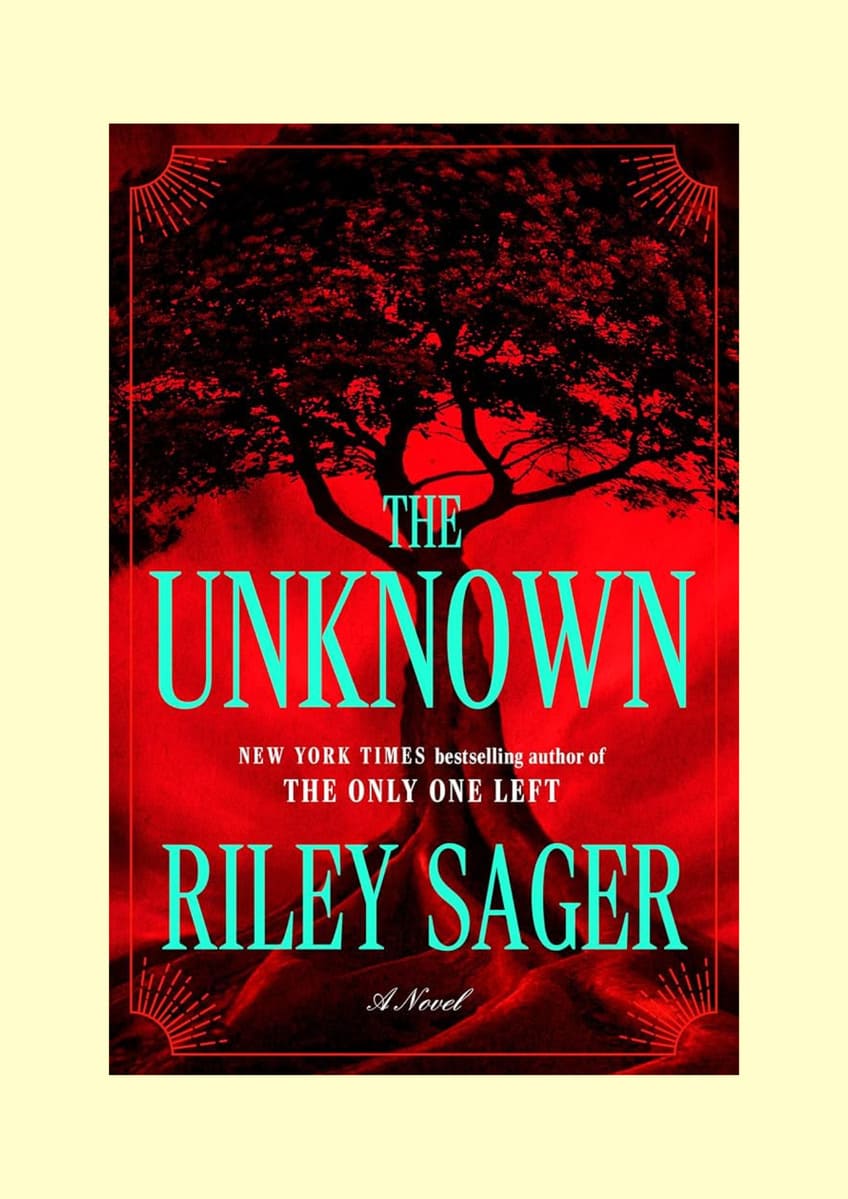

1. About the Author: Riley Sager
Riley Sager is one of the most recognizable names in contemporary psychological thriller and suspense fiction. A New York Times bestselling author, he is particularly known for combining classic mystery structures with familiar horror-movie tropes.
Before The Unknown, Riley Sager built an impressive body of work that includes Final Girls, The Last Time I Lied, Lock Every Door, Home Before Dark, Survive the Night, The House Across the Lake, The Only One Left, Middle of the Night, and With a Vengeance. The Unknown marks his tenth novel. According to his Goodreads author profile, Sager’s books have been published in more than 40 countries and have sold more than 5 million copies worldwide.
What makes Riley Sager’s style distinctive is the way he borrows recognizable horror archetypes and reshapes them into modern psychological thrillers. Final Girls explores the “final girl” concept from slasher movies, Home Before Dark centers on a possibly haunted house, Lock Every Door turns a luxurious apartment building into a place of menace, while The Only One Left uses an isolated mansion and an old murder mystery.
The Unknown continues that tradition by combining three particularly compelling ingredients: a closed-circle mystery, the story of a possibly cursed film production, and supernatural suspense.
One of the main reasons Riley Sager continues to attract readers is his ability to make them question what they have just learned. Answers that initially seem convincing are often overturned by new information, forcing readers to rebuild their theories again and again.
The Unknown follows that same storytelling philosophy. Publishers Weekly noted that Sager refreshes familiar closed-circle mystery conventions effectively enough to keep the suspense working, while also suggesting that longtime fans will likely find much to enjoy.
2. About the Narrators: Maggie Grace, Erin Lin, Patricia Santomasso, and Riley Sager
The Unknown Audiobook is not performed by a single narrator. Instead, it features an ensemble cast that includes Maggie Grace, Erin Lin, Patricia Santomasso, and Riley Sager. This casting decision becomes one of the strongest elements of the audio edition.
Maggie Grace is the central voice of the Audiobook and performs most of Marin Keane’s perspective. Grace is widely known as an actress from productions such as Lost and Taken. Her acting background allows her to do more than simply read the text; she clearly conveys Marin’s shifting psychological state.
According to Kirkus’s Audiobook Review, Grace is especially effective at contrasting the moments when Marin tries to reassure herself with the moments when fear begins to take over. As supernatural elements intensify, Grace lowers and roughens her voice, making the tension feel more immediate.
Erin Lin performs the sections connected to Daisy Rue and the diary entries from 1926. Her style is softer, more restrained, and more fragile than Grace’s. This distinction is important because it allows listeners to recognize the shift between timelines almost instantly without relying entirely on chapter headings or exposition.
Kirkus also highlighted the way Erin Lin communicates Daisy’s growing fear as the events on New Avalon become increasingly difficult to explain.
Patricia Santomasso has a smaller role, but her performance is still mentioned positively as part of the Audiobook’s overall ensemble strength. The use of multiple voices prevents a story with several narrative layers from becoming monotonous.
Riley Sager himself is also officially credited among the narrators. His presence adds a sense of closeness to the original text and makes the production feel more connected to the author behind the story.
Overall, the casting works especially well because of the structure of The Unknown. Instead of asking one narrator to create every voice and distinguish both timelines alone, the Audiobook uses natural vocal differences to separate time periods, characters, and emotional states.
3. About The Unknown
The Unknown was published by Dutton on August 4, 2026. The hardcover edition runs 368 pages. The novel falls within the thriller, suspense, and supernatural thriller genres.
The story begins with a mystery from 1926 on New Avalon, an isolated island in a Vermont lake. The island had once been home to a group of women associated with spiritualism and séances.
Then, one day, five of those women disappeared.
There were no bodies.
There was no clear evidence that they had escaped.
The most disturbing clue left behind was a set of five dresses hanging from the branches of a large oak tree.
One of the missing women was Daisy Rue. Her surviving diary became the most important account of the group’s final days. From that diary emerged a terrifying possibility: could a séance gone wrong have released something onto the island?
One hundred years later, struggling actress Marin Keane unexpectedly lands the lead role in a film inspired by the New Avalon disappearances.
The film’s director, Ronan Peters, takes Marin and the other actresses to New Avalon to prepare for production. They are asked to live under conditions similar to those experienced by the women in 1926: period clothing, limited modern conveniences, no phones, and participation in séances.
What initially appears to be an extreme acting exercise quickly becomes a nightmare.
Strange phenomena begin to occur.
Then people on the island begin to disappear.
Even more disturbing, the sequence of events starts to resemble what Daisy recorded in her diary a century earlier.
The Unknown stands out because it combines a closed-circle mystery with supernatural horror. Readers are repeatedly forced to ask whether New Avalon is genuinely haunted or whether someone is deliberately recreating the events of 1926.
At the same time, the novel explores fame, trauma, ambition, women in the entertainment industry, and the way Hollywood can turn real tragedy into commercial entertainment.
At the time of writing, The Unknown holds an average Goodreads rating of approximately 3.9 out of 5, based on tens of thousands of reader ratings. Four-star reviews make up the largest share of responses.
On Audible, the Audiobook sits around the low-to-mid 4-star range, suggesting that the audio edition may be receiving slightly more consistent praise than the story itself.
The Unknown was also promoted as an instant #1 New York Times bestseller and appeared on several anticipated-books lists around publication.
No independently verified public sales figure for The Unknown is currently available, so specific unit sales should not be stated as fact.
4. Review of The Unknown
If there is one element that stands out most clearly in any Review of The Unknown, it is atmosphere.
From the premise alone, Riley Sager creates a memorable image: five missing women, five dresses hanging from a tree, a surviving diary, and an island surrounded by rumors of supernatural activity.
Sager uses New Avalon in much the same way a horror writer might use a haunted house. The island is not just a setting. It becomes an active part of the threat.
Dark woods, old buildings, mysterious symbols, séances, isolation from the outside world, and the constant sense that something may be watching the characters create the strongest part of the Book.
Critics and readers have repeatedly described The Unknown as atmospheric, eerie, creepy, and cinematic. Publishers Weekly also praised Sager’s ability to refresh familiar genre conventions.
Another major strength is the use of two timelines.
In the present day, readers follow Marin.
In the past, Daisy’s diary slowly reveals what happened on the island in 1926.
The two narrative threads begin to mirror each other.
An event in Daisy’s diary may become a warning for Marin.
A seemingly insignificant detail from the past can completely change the way the present is understood.
This structure is especially effective because the central question is not simply “Who did it?”
The deeper questions are:
Who can be trusted?
Are Marin’s experiences real?
Are the supernatural events genuine, or are they products of trauma and manipulation?
Who controls the story of the women who disappeared in 1926?
That uncertainty is one of the novel’s greatest strengths.
The pacing, however, is more divisive.
The opening establishes the mystery effectively, and the final section contains several dramatic developments, but the middle can feel repetitive. The constant comparison between Daisy’s diary and the actresses’ experiences sometimes slows the momentum.
Some Goodreads readers enjoy this repetition because it strengthens the sense that history is repeating itself, while others feel that the middle section could have been significantly tighter.
Marin herself may also divide readers.
She is a struggling actress whose career could be transformed by playing Daisy. That gives her a believable reason to remain on the island even after circumstances become increasingly dangerous.
At the same time, she carries emotional guilt connected to the death of someone close to her. Sager uses that trauma to keep readers uncertain about whether what Marin sees is supernatural or psychological.
However, some critics have argued that Marin occasionally functions more as a vehicle for the plot than as a fully developed protagonist.
The most controversial part of any Review of The Unknown is likely to be its twists.
Publishers Weekly was relatively positive, noting that the twists may not rank among Riley Sager’s most spectacular but remain effective.
Kirkus was more critical, arguing that the excellent atmosphere is weakened by an ending overloaded with revelations and logical gaps.
Other critics have raised similar concerns, suggesting that the story becomes increasingly complicated as one twist leads into another.
That is the central trade-off of the Book.
Riley Sager wants readers to keep changing their theories, but The Unknown sometimes pushes that instinct too far.
For readers who love thrillers where nothing can be trusted until the final pages, however, this may actually be part of the appeal.
The novel also has more thematic depth than a simple puzzle thriller. It explores fame, trauma, female agency, exploitation, and the way real stories can be repackaged by the entertainment industry.
Hollywood is not just a backdrop in The Unknown. It becomes a system in which real suffering can be transformed into content, women’s experiences can be rewritten, and ambition can persuade people to ignore obvious danger.
Personal Thoughts on the Book
For me, the strongest reason to read The Unknown is not whether it is Riley Sager’s most perfectly constructed novel, but how effectively he turns a cinematic premise into a story that constantly encourages doubt. The image of five dresses hanging from a tree, the isolation of New Avalon, and the two timelines separated by exactly one hundred years give the Book a very distinct identity. I especially enjoyed the way the story preserves the tension between supernatural and rational explanations for as long as possible. The final section may be slightly overloaded with twists, but the journey toward those answers is creepy, mysterious, and entertaining enough to make The Unknown well worth reading.
5. Review of The Unknown Audiobook
If the print version of The Unknown has received somewhat divided reactions, the Audiobook has one clear advantage: the story is almost ideally structured for a multi-narrator performance.
The Audiobook was released by Penguin Audio on August 4, 2026, and runs approximately 11 hours and 33 minutes in unabridged format. The official narrator lineup includes Maggie Grace, Erin Lin, Patricia Santomasso, and Riley Sager.
The most important element is the contrast between Marin and Daisy.
In the print Book, readers must rely on headings, context, and prose style to recognize changes in timeline.
In the Audiobook, listeners can hear those changes immediately.
Maggie Grace gives Marin a voice that sounds controlled on the surface but increasingly vulnerable as the events on the island become harder to explain.
Kirkus praised this part of her performance, noting how effectively she shifts between Marin’s self-reassurance and her growing panic. When supernatural moments appear, Grace lowers her voice and adds a rougher tone that makes the scenes feel more unsettling.
Erin Lin creates a very different sound for Daisy.
Her voice is softer and more restrained, which suits a character who exists primarily through a diary from 1926. As Daisy begins to realize that the situation on New Avalon may be much more dangerous than expected, Lin’s delivery becomes more fragile and uncertain.
Kirkus specifically highlighted the way Lin captures Daisy’s growing fear.
Patricia Santomasso has less material, but her presence still adds important vocal variety. In an Audiobook that lasts more than 11 hours and contains several narrative layers, having multiple distinct voices helps maintain clarity and prevents the performance from becoming repetitive.
Most significantly, Kirkus gave the Audiobook a “GET IT” verdict and concluded that the ensemble cast noticeably enhances the thriller.
That is an interesting contrast with Kirkus’s more critical Review of the Book itself. Even when the plot becomes overly complicated, the performances help preserve tension and emotional momentum.
The Audible rating also suggests a generally positive listener response, with the Audiobook currently averaging around the low-to-mid 4-star range.
That said, Maggie Grace’s performance may not work equally well for everyone. Some listener reviews have criticized the use of whispering or very soft delivery in certain passages.
This is worth considering if you usually listen while driving, commuting, or in noisy environments.
On the other hand, when heard through headphones in a quiet setting, those quieter moments can make the suspense significantly more effective.
The Audiobook format is also particularly well suited to the séances, late-night sounds, and scenes where Marin is unsure whether she has truly seen or heard something. A narrator can manipulate breath, pacing, and volume in ways that add tension without requiring elaborate sound design.
Kirkus summarized the strength of the production well by describing the thriller as enhanced by an excellent cast.
Personal Thoughts on the Audiobook
If I had to choose between reading The Unknown in print and listening to the Audiobook, I would lean toward the Audiobook. The dual timeline and multi-character structure benefit enormously from the ensemble cast. Maggie Grace gives Marin vulnerability and immediacy, while Erin Lin makes Daisy feel like a genuine voice echoing from 1926. That vocal distinction keeps the past and present clear without making the story feel fragmented. Because The Unknown depends so heavily on atmosphere, séances, strange noises, and uncertainty about what is real, voice performance can significantly increase the tension. The occasional whispering may frustrate some listeners, but overall the Audiobook offers the more immersive experience.
6. Who Should Read The Unknown?
The Unknown will not appeal to every thriller reader, but it is particularly well suited to several audiences.
First, it is a strong choice for readers who enjoy psychological thrillers and supernatural thrillers.
If you like stories where rational and supernatural explanations coexist for much of the narrative, The Unknown gives you plenty to work with. Sager repeatedly forces readers to consider whether something genuinely exists on New Avalon or whether human manipulation is the greater danger.
The second ideal audience is readers who enjoy closed-circle mysteries.
The island setting creates an almost perfect environment for this structure. The characters are isolated, the suspect pool is limited, and opportunities to escape become increasingly restricted.
Fans of dual-timeline fiction should also find the Book appealing. The relationship between Daisy in 1926 and Marin in 2026 forms one of the central engines of the story.
Longtime Riley Sager readers have another reason to pick up The Unknown. As his tenth novel, it contains several recurring motifs that will feel familiar to readers of his earlier work.
Fans of Home Before Dark may be especially interested because both novels rely heavily on ambiguity between paranormal activity and possible real-world explanations.
On the other hand, readers who prefer mysteries that are completely logical, demand that every twist be tightly foreshadowed, or strongly dislike supernatural ambiguity may find The Unknown frustrating.
For Audiobook listeners, however, this is an especially strong option.
The narrators help separate timelines naturally, while the creepy atmosphere works particularly well through headphones.
The Unknown Audiobook is therefore a good choice for listeners who enjoy thrillers while commuting, exercising, doing housework, or simply looking for a more cinematic storytelling experience.
7. Conclusion
The Unknown proves that Riley Sager remains highly skilled at creating a premise that immediately makes readers want answers.
Five women disappeared in 1926.
Five dresses were left hanging in a tree.
A diary survived.
An isolated island was associated with spiritualists and séances.
And exactly one hundred years later, a group of actresses returned to the same place to recreate the story.
That setup is strong enough to support an engaging thriller, and Sager makes good use of New Avalon to build atmosphere.
The Unknown is not perfect. Character development occasionally takes a back seat to plot, the middle section can feel repetitive, and the ending contains enough twists to overwhelm some readers.
But if you want a suspenseful Book that encourages you to build theories, destroy those theories, and then question the new ones you just created, The Unknown succeeds very well.
Publishers Weekly suggested that even if the twists are not among Riley Sager’s most shocking, they remain effective and should satisfy many longtime fans.
The Audiobook provides another compelling reason to experience the novel. Maggie Grace, Erin Lin, and Patricia Santomasso give the two timelines distinct vocal identities, while Kirkus gave the audio production a strong recommendation.
If you enjoy thrillers mixed with horror, isolated settings, unresolved historical mysteries, and stories that leave open the possibility that the most frightening explanation may not be entirely human, The Unknown deserves a place on your reading or listening list.
8. Where to Listen to the Audiobook
#CommissionsEarned
As an Amazon Associate I earn from qualifying purchases.
You can listen on the following platforms:
We recommend signing up for a membership to enjoy seamless access to this and many other high-quality audiobooks anytime, anywhere.




Reviews
There are no reviews yet.